
Solution
GLAR (GreenLight Asset Registry) addressed the root cause: the gap between design intent and field reality.
Rather than treating documentation as a closeout task, GLAR embedded device data capture directly into the installation workflow.
Designed specifically for field contractors, the mobile platform allowed installers to preload equipment data from design documents, scan device barcodes and QR codes, enter MAC addresses, confirm physical locations, and photograph installations.
Documentation time dropped to seconds per device compared to traditional manual documentation processes. Because the workflow aligned with field practices, adoption remained strong across contractor segments and geographies.
With structured data captured during installation, commissioning agents began work as devices came online. Commissioning shifted from a sequential, end-of-project activity to a parallel workflow. Connectivity was validated in real time, controls were configured remotely, and integrations were tested immediately.
When issues arose, agents created punch list items within the platform, complete with photos and detailed instructions. Errors were identified early in the installation process, preventing systemic rework and reducing unnecessary site revisits.
Standardized documentation across every branch ensured consistent capture of part numbers, warranty information, MAC addresses, network configurations, physical device locations, and control zone assignments.
Program managers gained portfolio-wide visibility into installation quality and commissioning progress. General contractors could verify installation milestones to support payment documentation.
Structured field data enabled remote commissioning to function as a repeatable operating model at national scale.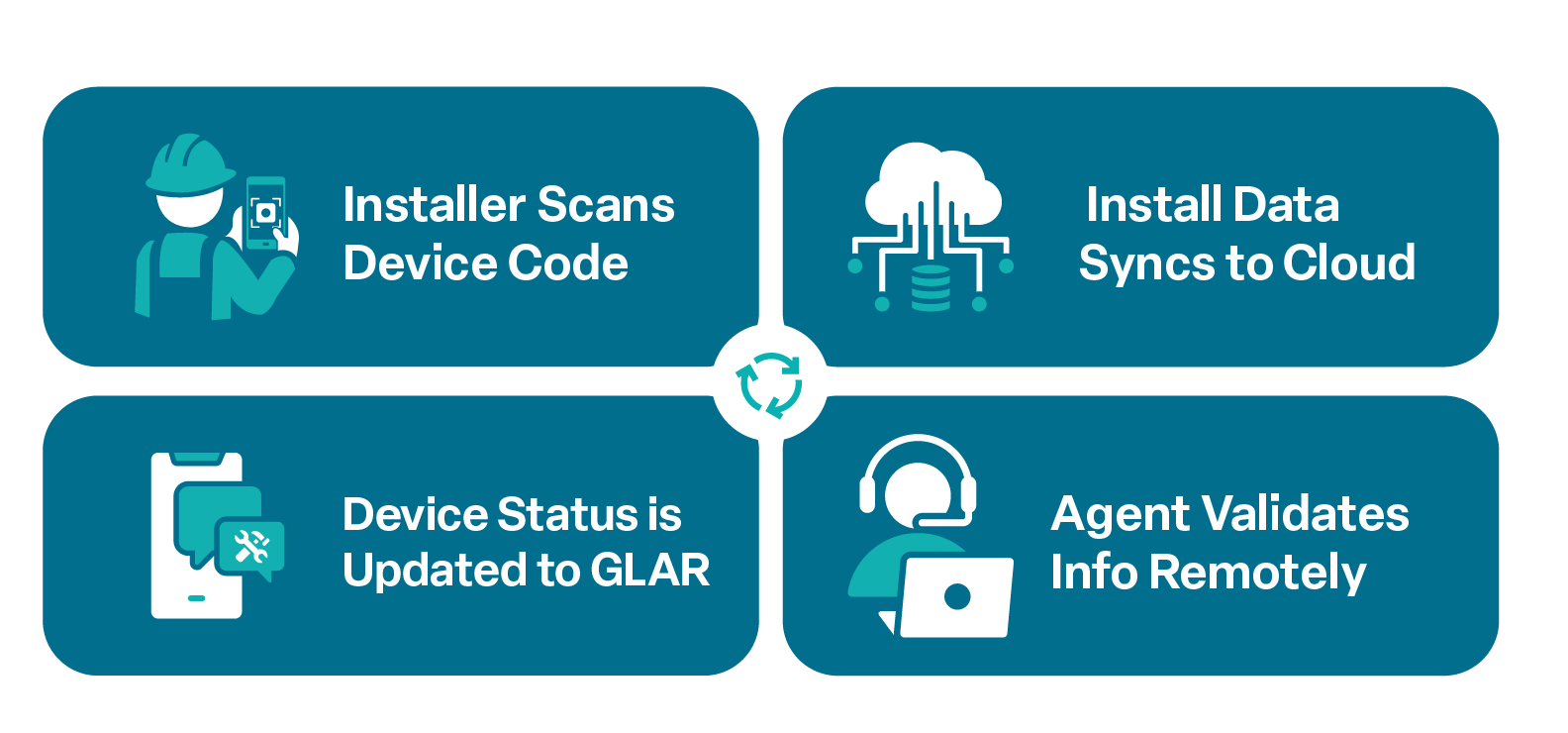
Results
67% Cost Reduction
Traditional commissioning averaged approximately $10,000 per branch. The remote model reduced costs to approximately $3,300 per branch, saving $6,700 per site.
At 200 branches annually, this equates to $1.34 million in annual savings and more than $5.3 million over four years. These figures exclude avoided rework, eliminated false startups, and related operational efficiencies.
Importantly, cost reduction was achieved alongside improved documentation consistency and installation oversight.
Commissioning Removed from the Critical Path
Traditionally, on-site commissioning occurred at project closeout and often became a bottleneck that delayed turnover.
With remote commissioning enabled through structured field data, installation and commissioning ran in parallel. Commissioning travel availability no longer dictated site schedules, improving closeout timelines and reducing project friction across the portfolio.
85% First-Attempt Remote Success Rate
Approximately 85% of devices were successfully commissioned remotely on the first attempt. The remaining 15% were resolved through structured punch list workflows, typically without requiring additional site visits.
Each branch averaged approximately 30 punch list items, all resolved through the platform. Early identification reduced widespread installation errors and minimized costly rework.
Complete, Standardized Documentation Delivered
Every branch received consistent, structured documentation created during installation rather than reconstructed at closeout.
This documentation supports operational handoff, facility maintenance, asset lifecycle tracking, warranty validation, and future system upgrades.
The documentation framework established during commissioning continues to support long-term portfolio management.
Expanded Scope Within the Same Framework
Following validation of the remote commissioning model, the customer expanded the program scope to include whole-branch connected control coverage across all spaces while leveraging the same remote commissioning workflow.
Complex HVAC integrations, including Tridium, were incorporated into the standard process. LEED certification support was added without requiring separate documentation efforts. Integration into managed network infrastructure reduced reliance on cellular modems while improving cybersecurity alignment.
Key Takeaways
This program illustrates how embedding structured device data capture directly into installation workflows enabled remote commissioning at national scale. The following points summarize how structured field data supported cost predictability, installation quality, and program flexibility across the portfolio.
- Structured field data capture enabled remote commissioning at portfolio scale
- Continuous commissioning removed bottlenecks and improved installation quality
- 67% cost reduction enabled expansion to more sites within budget
- Documentation created during commissioning supports ongoing facility operations
- Scope expansion (whole-building coverage, HVAC integration, LEED certification) achieved while maintaining cost advantages
Conclusion
This program demonstrates that structured field data capture enables remote commissioning at portfolio scale.
By embedding documentation directly into installation workflows and centralizing device-level data within a digital asset registry, the customer established a scalable commissioning framework across a geographically distributed portfolio.
Commissioning became an integrated, data-driven workflow rather than a site-dependent closeout activity, supporting predictable cost, consistent documentation, and expanded program capabilities across 1000+ locations.